

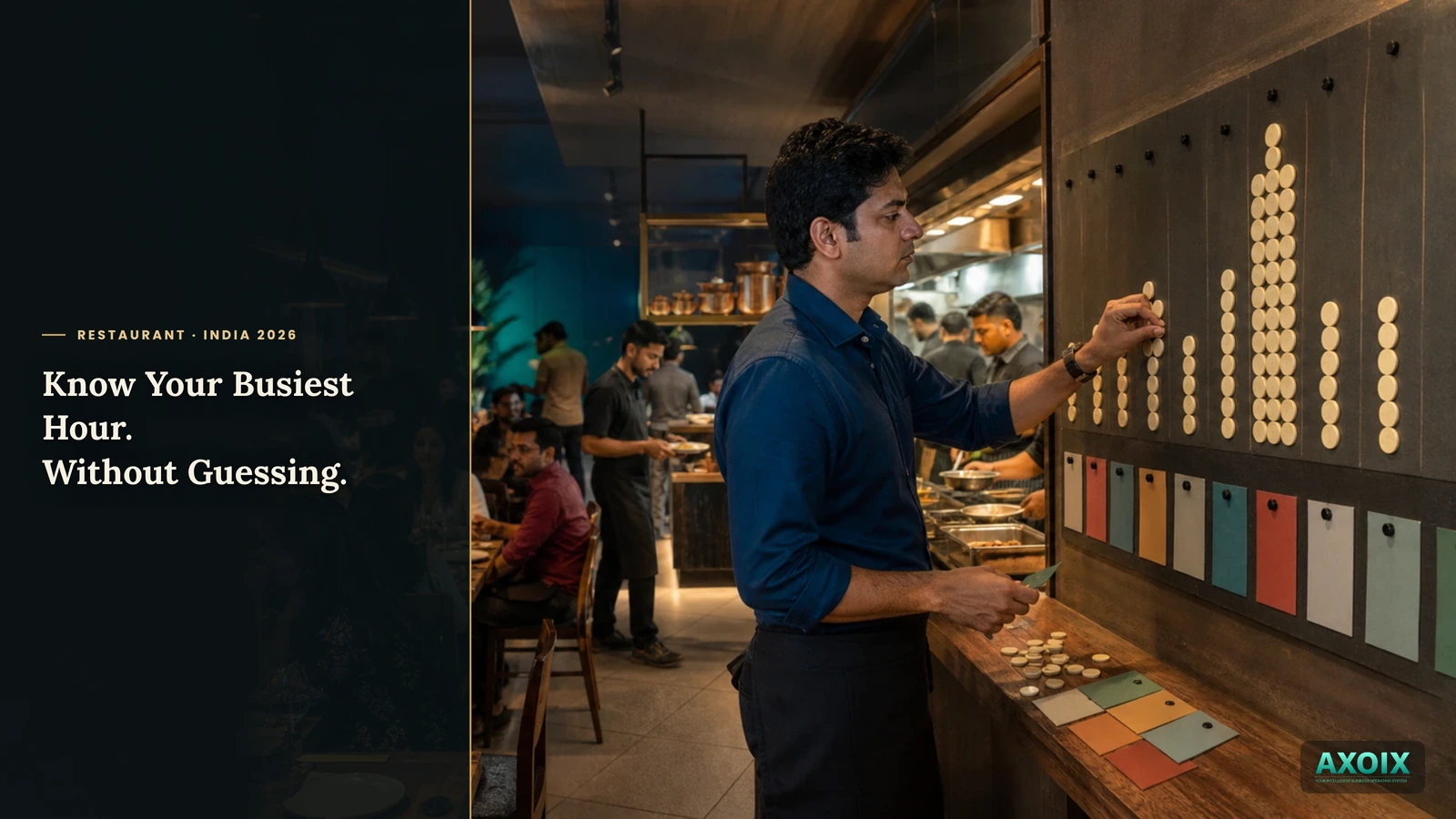
Ask a restaurant owner when their busiest hour is, and most will answer confidently — from memory, from feel, from the shifts that stick out. Ask them to prove it with numbers, and most can't. Here's what changes when the answer comes from actual order data instead of a strong impression.
Quick answer (for the impatient)
- Peak-hour analysis shows real order and revenue patterns by hour and by day of week — not a guess.
- Sales break down by order type — dine-in, takeaway, delivery.
- Item-wise reports show what's actually selling, by quantity and by revenue — not what feels popular.
Staffing by instinct
Scheduling based on a feel for "when it gets busy" isn't unreasonable — it's just imprecise in ways that cost money either direction. Overstaff a quiet hour and you're paying for idle time. Understaff the actual peak and service suffers exactly when it matters most for reputation and repeat business. The gap between "I think Friday night is our busiest" and knowing which specific hour, on which specific day, actually carries the volume is the gap between a schedule built on memory and one built on data.
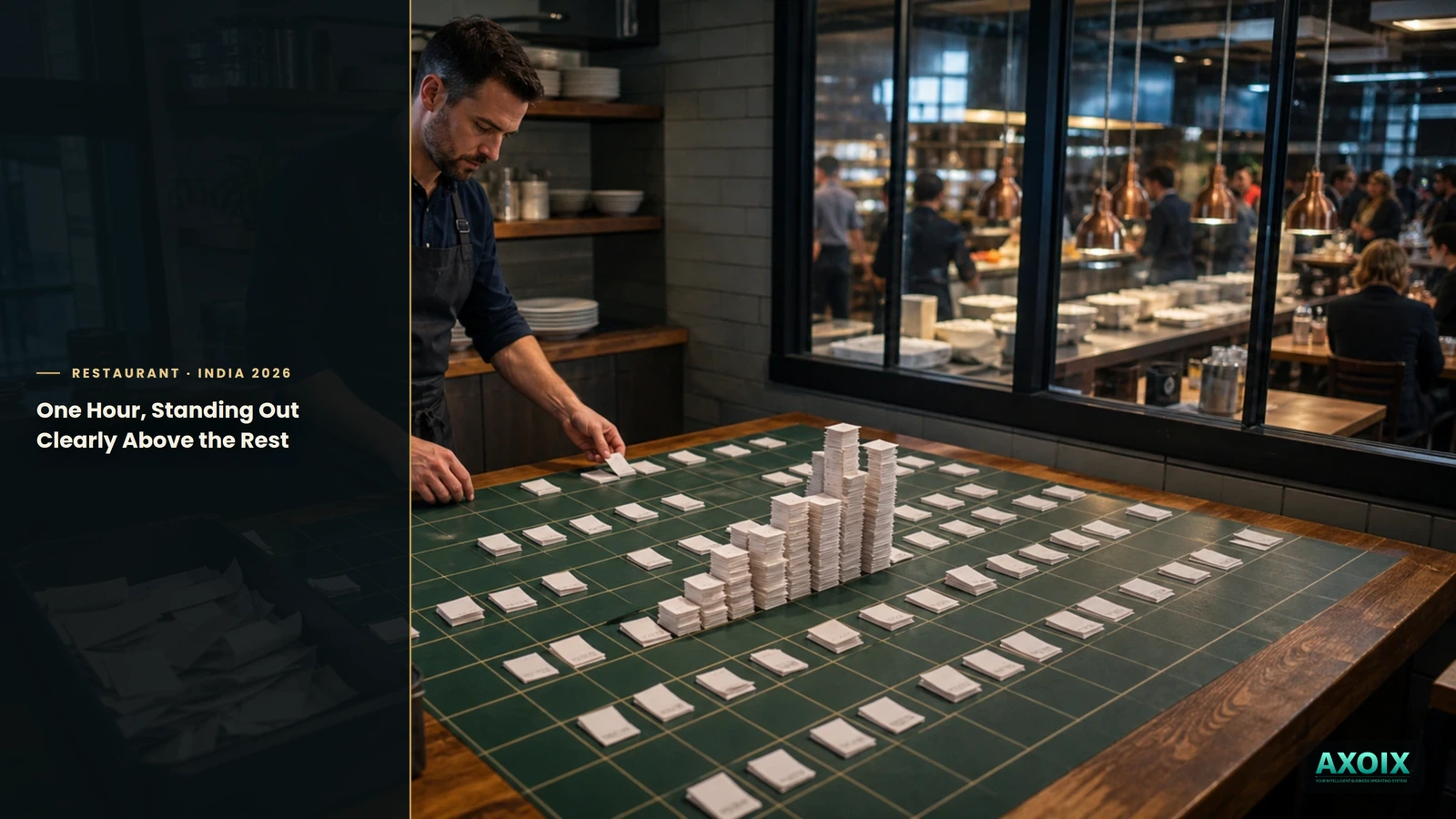
AXOIX's peak-hour report pulls directly from actual order history — a real hourly breakdown and a real day-of-week breakdown, not an estimate — so "our busiest hour" becomes something you can point to, not something you're fairly sure about.
Which dish is actually carrying the menu
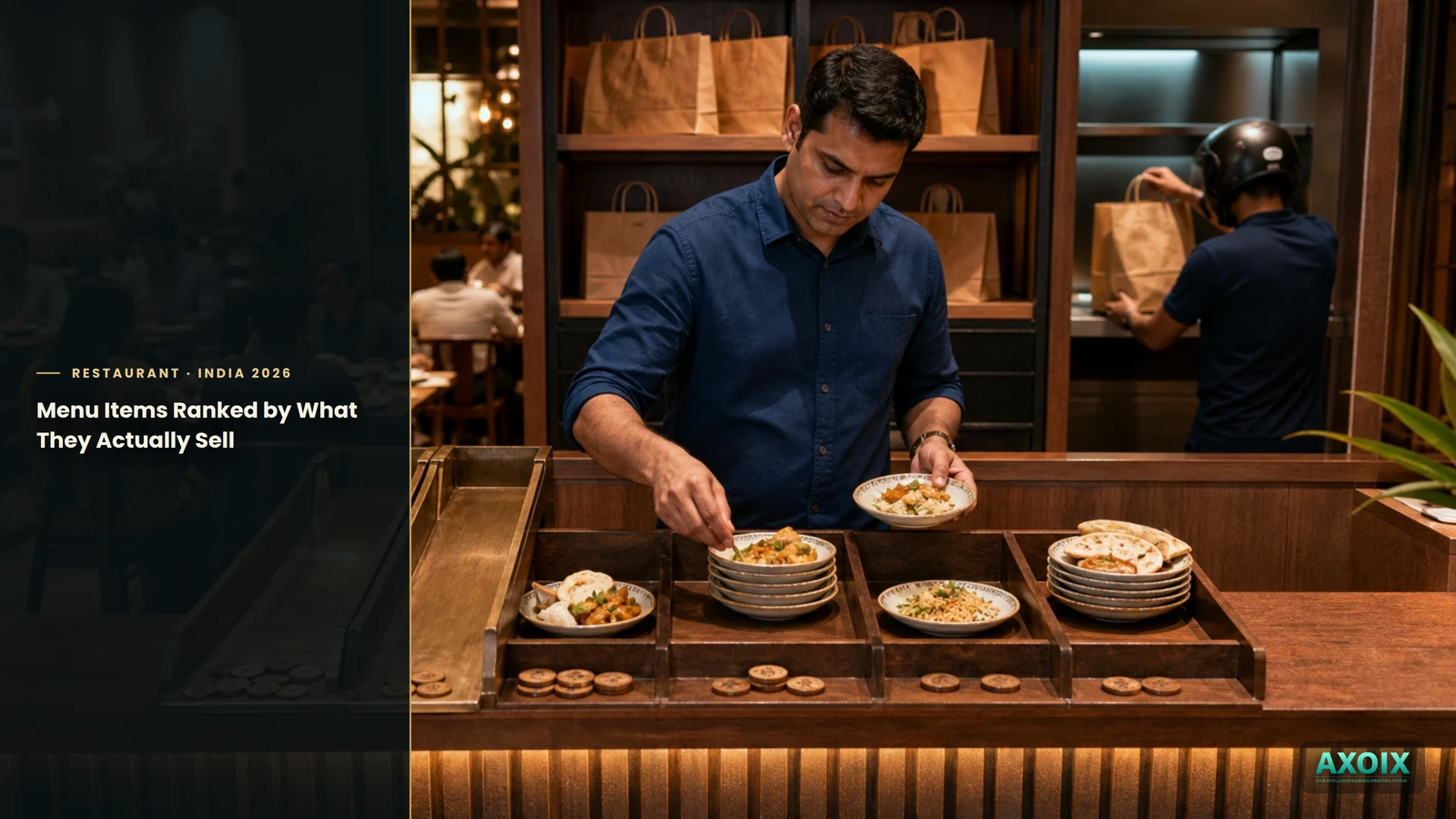
The item-wise sales report ranks menu items by what they actually sell — by quantity moved and by revenue generated — which doesn't always match which dish gets talked about most. The broader sales report splits revenue by how the order came in — dine-in, takeaway, delivery — so you can see which channel is actually driving the business, not just the total.
A live dashboard rounds this out for the day itself: today's revenue, order count, average order value, how many tables are currently occupied, and what's pending versus actively being worked — the numbers that matter mid-shift, not just at month-end.
Where AXOIX is honest about its limits
- No table-turnover-time report. How long a table takes to turn over isn't something these reports currently measure.
- No food-cost-percentage reporting here. These are sales and demand reports; cost-side reporting (what a dish actually costs to make) lives in the recipe-costing side of the system, not folded into these analytics.
FAQ
Can I see my restaurant's actual busiest hour?
Yes — a real hourly and day-of-week breakdown from order history, not an estimate.
Can I see which menu items actually sell the most?
Yes — ranked by quantity and by revenue.
Can I break down sales by dine-in vs. delivery vs. takeaway?
Yes — sales reporting splits by order type.
The bottom line
Running a restaurant on a feel for when it gets busy and what sells works fine — until the feel is wrong and it costs you a bad staffing decision or a menu that's priced around the wrong dish. Numbers pulled from what actually happened settle the question instead of guessing at it.
See how staff roles match a real shift, the full restaurant system overview, or pricing.
See your real numbers, not a guess. Start free →
Comments